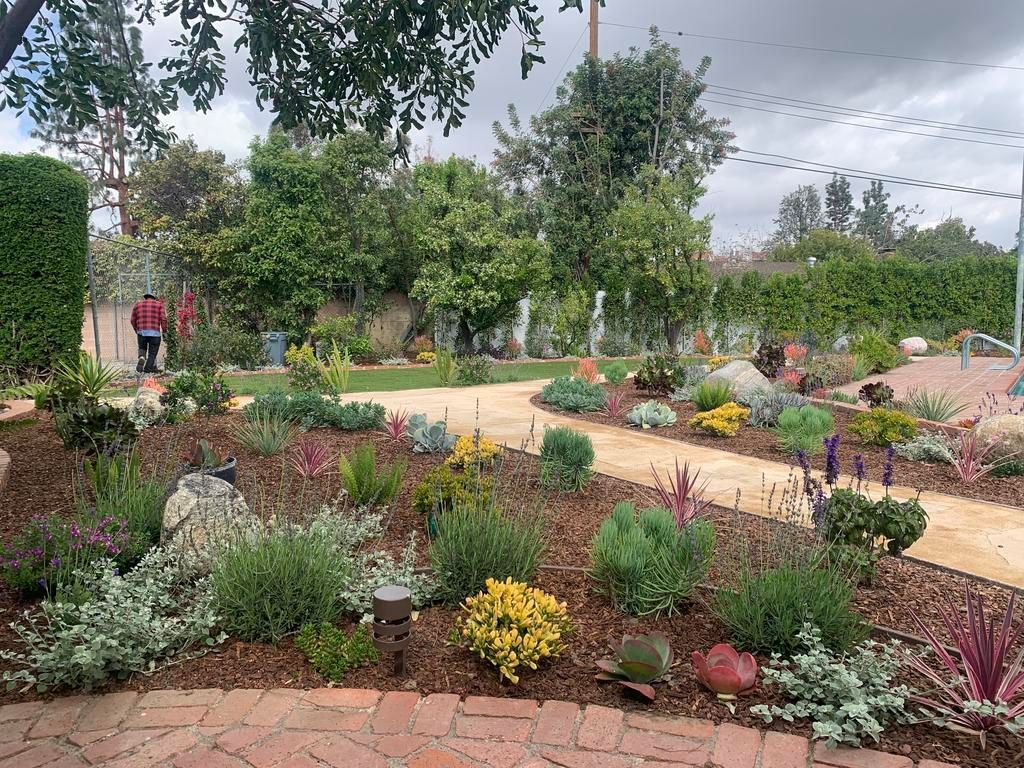
Sprinkler to Drip Irrigation in Los Angeles, CA
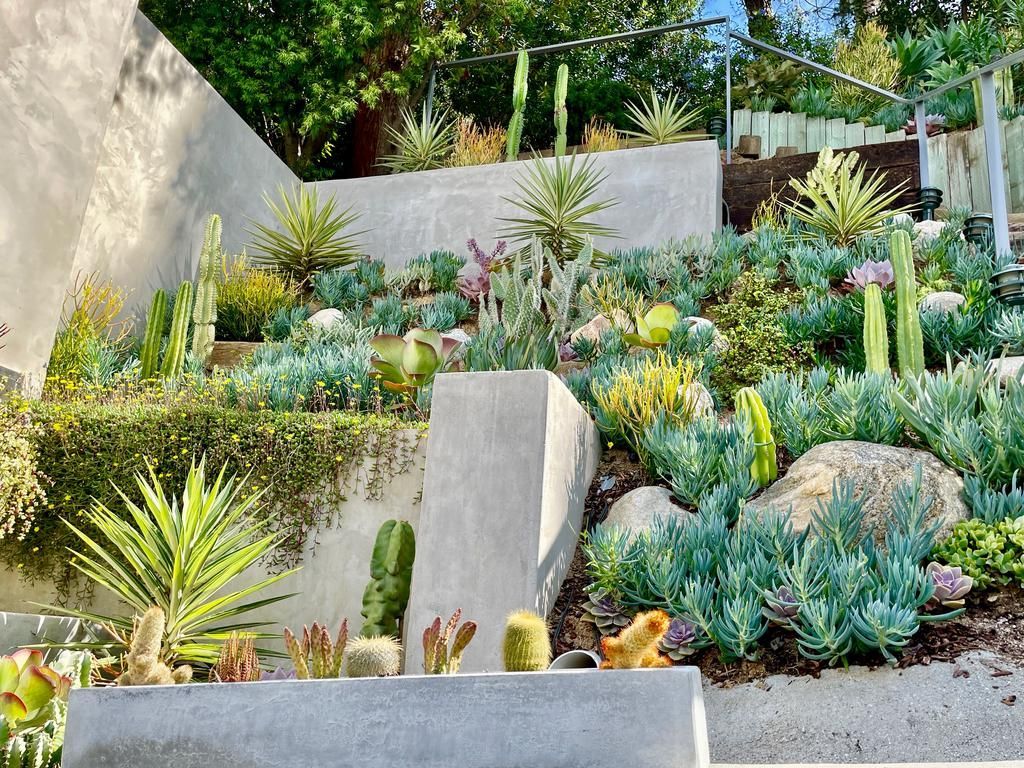
Sprinkler to Drip Irrigation in Los Angeles is today the backbone of successful landscaping design. In Los Angeles, Santa Monica and other water districts, this conversion can be part of a rebate program to encourage water conversation.
Without well-planned irrigation, even the most beautifully designed garden struggles to thrive. As a landscape designer based in Los Angeles, I approach irrigation as an extremely important integral part of a landscape design project.
Every irrigation system is relevant to the existing water pressure of a home or commercial property. Pressure relief valves, new irrigation valves, water efficient sprinkler heads, and drip line must support the long-term health of plants, soil, and trees while aligning with California water conservation. The goal is consistency, efficiency, and adaptability as the landscape matures.
Sprinklers a Shower…Drip Line a Bath!
Grass is often an existing and preferred feature of an established garden. Today there are efficient sprinkler heads that conserve water, and spray water efficiently.
My mantra is…a sprinkler is a shower, a drip line is a bath.
I believe plants are happy when they receive a bath, dry off, welcome another in two days, sometimes daily in very hot weather. Underneath the mulch, bark or stones, plants are being watered efficiently at the root level while minimizing evaporation and runoff. This requires precise drip line placement, pressure regulation, and stations on a timer to regulate the watering of the garden.
Tradition gardens in California has sprinklers that water the grass and the surrounding plants. It is often possible to separate water distribution; the grass remains on its existing station, a new drip line on another, often using an existing sprinkler valve and station for the drip, without having to install a new valve. Putting both on one valve is never recommended.
The quantity and placement of drip line can only be calculated after the design is 100% approved and installed so the water delivery matches plant needs, sun exposure, and soil conditions. Each zone of the landscape will then function independently without overwatering or neglecting new plants.
I consider how trees, shrubs, and groundcovers interact with drip lines over time. Proper irrigation supports root development and encourages plants to establish naturally within the environment. When drip lines are integrated into designs from the beginning, and covered, the drip lines becomes invisible while remaining highly effective.
This method is essential for elaborate landscaping where subtlety matters.
Expert water conservation gardens depend on irrigation systems that respond to seasonal changes without requiring constant adjustment.
Irrigation becomes a quiet partner in the success of sustainable gardens rather than a dominant feature.
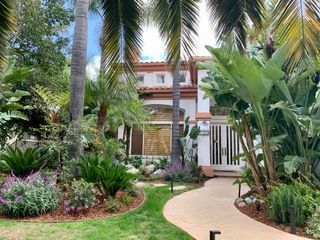
Water-Saving Irrigation Installation
Water-saving irrigation installation is central to responsible landscape design in Los Angeles. I focus on systems that deliver water efficiently at the root level while minimizing evaporation and runoff. This includes precision placement, pressure regulation, and zoning that reflects the diversity of the landscape.
I frequently design irrigation systems that support sprinkler to drip-line conversion for older landscapes that were built around inefficient spray systems. Drip irrigation allows for greater control and adaptability, especially layered planting schemes.
Expert water conservation gardens depend on irrigation systems that respond to seasonal changes without requiring constant adjustment.
Irrigation for Sustainable Gardens
Garden design relies on careful water management rather than heavy irrigation schedules. I design irrigation systems that support deep, infrequent watering patterns to encourage resilient root systems. This approach strengthens plants while reducing overall water use.
Sustainable gardens require irrigation systems that evolve as the landscape grows. I design layouts that allow zones to be adjusted or reduced over time as plants become established. This flexibility is critical for long-term landscaping design that prioritizes environmental responsibility.
Irrigation becomes a quiet partner in the success of sustainable gardens rather than a dominant feature.